Skip to content
Aerial view of the Borneo Nectar Industries production facility in Demak Laut Industrial Park, Kuching, Sarawak

About

Who are we?

Borneo Nectar Industries Sdn. Bhd. manufactures coconut and palm sugar in Kuching, Sarawak. We were founded in 2026 and manufacture at Demak Laut Industrial Park, Kuching.

We are a leading producer of coconut sugar and gula apong in Sarawak, with a range that includes coconut sugar, palm sugar, gula apong and gula melaka. Our sugar is sustainably farmed, supported by contract farming and a guaranteed buyback that gives our farming families a steady, dependable income. Our sugar reaches export markets and supplies F&B manufacturers, retailers and the HORECA sector.

Production facility, Demak Laut Industrial Park, Kuching

Vision

To be Southeast Asia's most trusted producer and supplier of coconut and palm sugar.

Recognised by the region's leading F&B brands for the consistency of our quality, the integrity of our supply chain, and our commitment to growing as one with the farming communities of Borneo.
Mission

We deliver pure, high-quality coconut and palm sugar that the F&B industry can depend on — every batch, every time.

We achieve this by building a supply chain anchored in trust: through contract farming with guaranteed buyback commitments, we empower our coconut sap farmers with the certainty of a ready market and the tools to grow alongside us — so that when our business grows, theirs does too.

Rooted in the rich natural heritage of Sarawak, Borneo, we hold ourselves to the highest standards of product purity, supply reliability, and ethical sourcing practice — because we believe the best ingredient in everything we make is the integrity behind it.

Core values

  1. 01

    Integrity in Every Promise

    We do what we say.

    • Our guaranteed buyback commitment to farmers is a contractual promise we honour every harvest, every season
    • The same standard of honesty governs every agreement we make with our clients
  2. 02

    Farmers First

    We grow when they grow.

    • Our contract farming model ensures coconut sap farmers of Borneo are empowered with certainty, stability, and the tools to thrive
    • Their prosperity is the foundation on which our supply chain is built
  3. 03

    Uncompromising Quality

    Pure product, every batch.

    • We maintain strict quality standards from the tapping of the coconut flower sap to the final packaged sugar
    • Our clients trust us because we never cut corners on the product they put in front of their customers
  4. 04

    Reliability as a Standard

    Consistent supply, no surprises.

    • We ensure that when our clients need product, it is ready — in the right volume, at the right specification, on time
    • F&B brands cannot afford supply disruptions, and we take that responsibility seriously
  5. 05

    Proudly Rooted in Borneo

    Origin is our advantage.

    • Sarawak's land, climate, and farming communities are our greatest natural assets
    • The distinctiveness of Borneo's natural sweeteners is something no other region can replicate
  6. 06

    Growth with Purpose

    Bigger, but never at the cost of better.

    • Our ambition to become Southeast Asia's leading natural sweetener supplier is matched by our commitment to benefit farmers, clients, and communities
    • Growth must be meaningful — not just for our bottom line, but for everyone in our supply chain

Where we start

We began in 2026, so there is no long history behind us yet. That also means nothing here was added on top of an older way of working. We built our processes the way we believed they should work, from the very first day.

We operate on the same standards as MeSTI, HACCP, GMP, halal and FSSC 22000, and we have held these standards from the very start rather than working toward them over time.

Our farmers matter to us before the orders do. We contracted their plots and guaranteed the buyback before we had the sales to support it. That commitment is why the same farms continue to supply us season after season, and why our supply stays steady no matter what the market is doing.

Because of how we buy, every batch can be traced back to the exact plot it came from. This was never a feature we added. It is simply what happens when the relationship comes first.

Founders

Borneo Nectar Industries was founded by two people who knew the trade before they built the company.
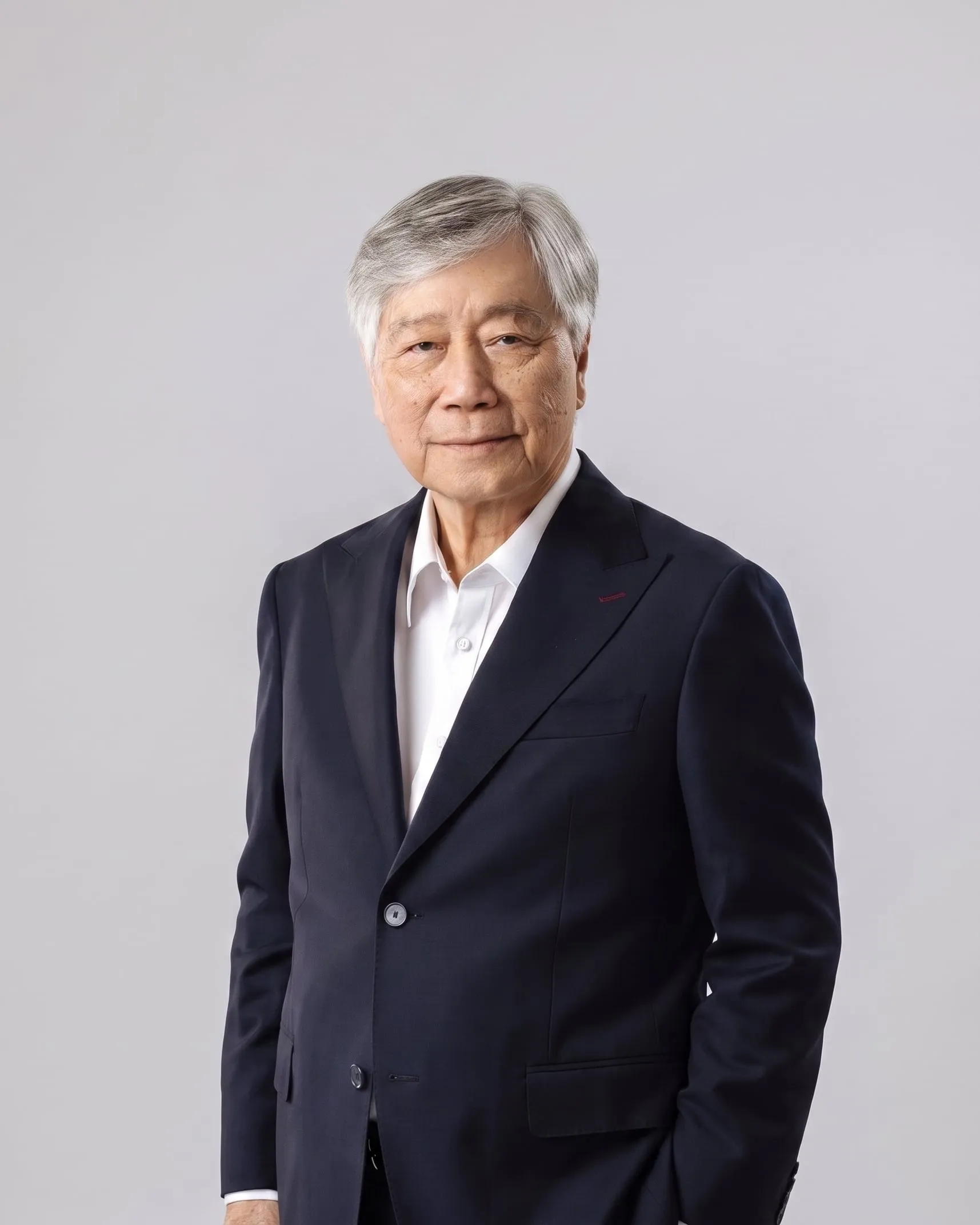
  • Portrait of Mr Peter Chai, Founder of Borneo Nectar Industries.

    Mr Peter Chai

    Founder

    Peter started out in construction work and the building materials trade before joining Nippon Paint (EM) Sdn Bhd as a salesman in 1969. Over the following decade he rose through PT Nipsea Paint and Chemicals in Indonesia — Sales and Marketing Manager in Sumatera, then Assistant General Manager, then head of the Indonesian sales and marketing operation for paints and coatings — and in 1977 became General Manager of PT Cakung Utama, the group's packaging division, where he learned the packaging industry from the inside.

    In 1980 he joined DPI Sdn Bhd as a Director and led its move into aerosol paint manufacturing. He acquired the company in 1985, and in 2018 listed DPI Holdings Berhad on the ACE Market of Bursa Securities, where he remains Executive Chairman and Managing Director. He is also a Non-Executive Director of Eneco Refresh Ltd, listed on the Australian Securities Exchange, and a director of private companies across Malaysia, Singapore, Australia and Hong Kong.

    He has been President of the Sarawak Manufacturing Association and a Council Member of the Sarawak Business Federation since 2022. He founded Borneo Nectar together with Audrey.

  • Portrait of Ms Audrey Lai, Managing Director of Borneo Nectar Industries.

    Ms Audrey Lai

    Managing Director

    Audrey has spent more than fifteen years in coconut and palm sugar manufacturing. She started on the production floor of a Sarawak manufacturer and worked up to director, building a certified food production system there from nothing: FSSC 22000, MeSTI, GMP, HACCP and halal.

    Over that time she took the operation from cottage scale to industrial export, running a fifty person plant and opening distribution into Australia, the UK, China and the Middle East.

    Named Women Entrepreneur of the Year by the Sarawak Manufacturers Association in 2025, and recognised as Best Exporter by MINTRED and MATRADE in 2024. She founded Borneo Nectar in 2026 to embark on the same mission, only bigger.

How we operate

Everything here supports the same claim.

  • Direct manufacturer

    We produce. We are not a trader, repacker, or broker.

  • Single origin, Sarawak

    One growing region, not a blend of bought-in lots.

  • Helping farmers

    We guarantee to buy the harvest before the season starts, so a good crop cannot end in a loss and a smallholder can plan and reinvest.

  • Short processing window

    Sap moves from tap to processing quickly, holding colour and flavour consistent.

  • Independent quality function

    A food safety and QA executive works separately from production.

  • Specification to order

    Granulation, moisture, and packaging set per order, not per catalogue.

Who we supply

Our customers are named nowhere on this site. Supply agreements and confidentiality obligations prevent it, which is why the descriptions below stay general.

  • Supplying regional beverage chains
  • Malaysian F&B manufacturers
  • ASEAN ingredient distributors

What is Gula Apong?

The sugar of the tides.

The nipah palm grows where rivers meet the sea, its trunk below the mud and only its fronds above it. It is not planted in rows or fed with fertiliser — the estuary does the work.

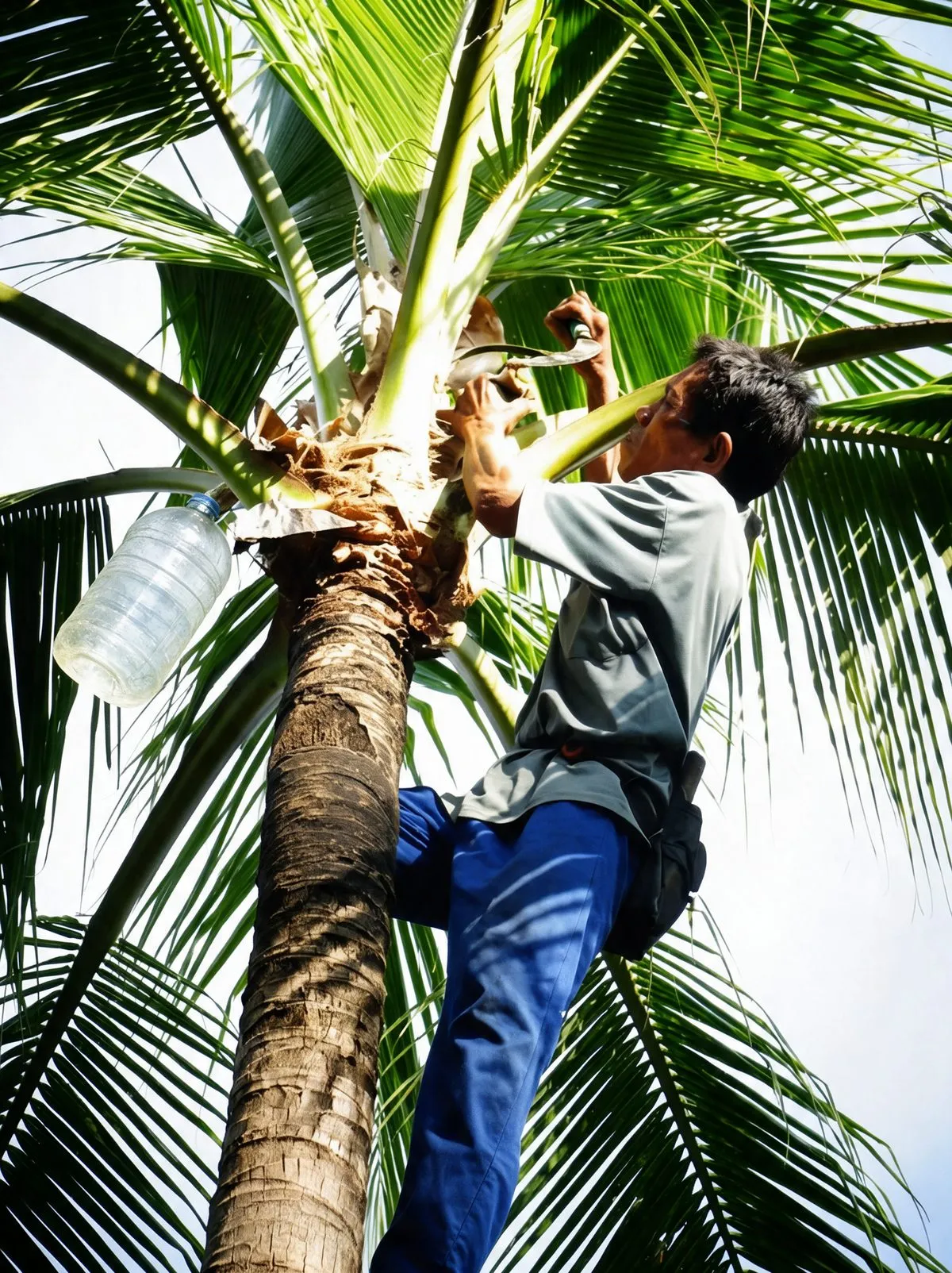
The sugar comes from the palm's flower stalk. A tapper cuts the stalk, and the sap that would have fed the fruit drips into a container instead — clear, mildly sweet, and collected by hand.

A tapper at the crown of a palm, cutting the flower stalk with a collecting container hung beside him

From stalk to sugar

Sap in the morning, sugar by evening.

Fresh sap ferments quickly, so it moves fast: boiled down in open woks over a wood fire, stirred as it thickens, then set or bottled. That short window is what keeps the colour and flavour consistent.
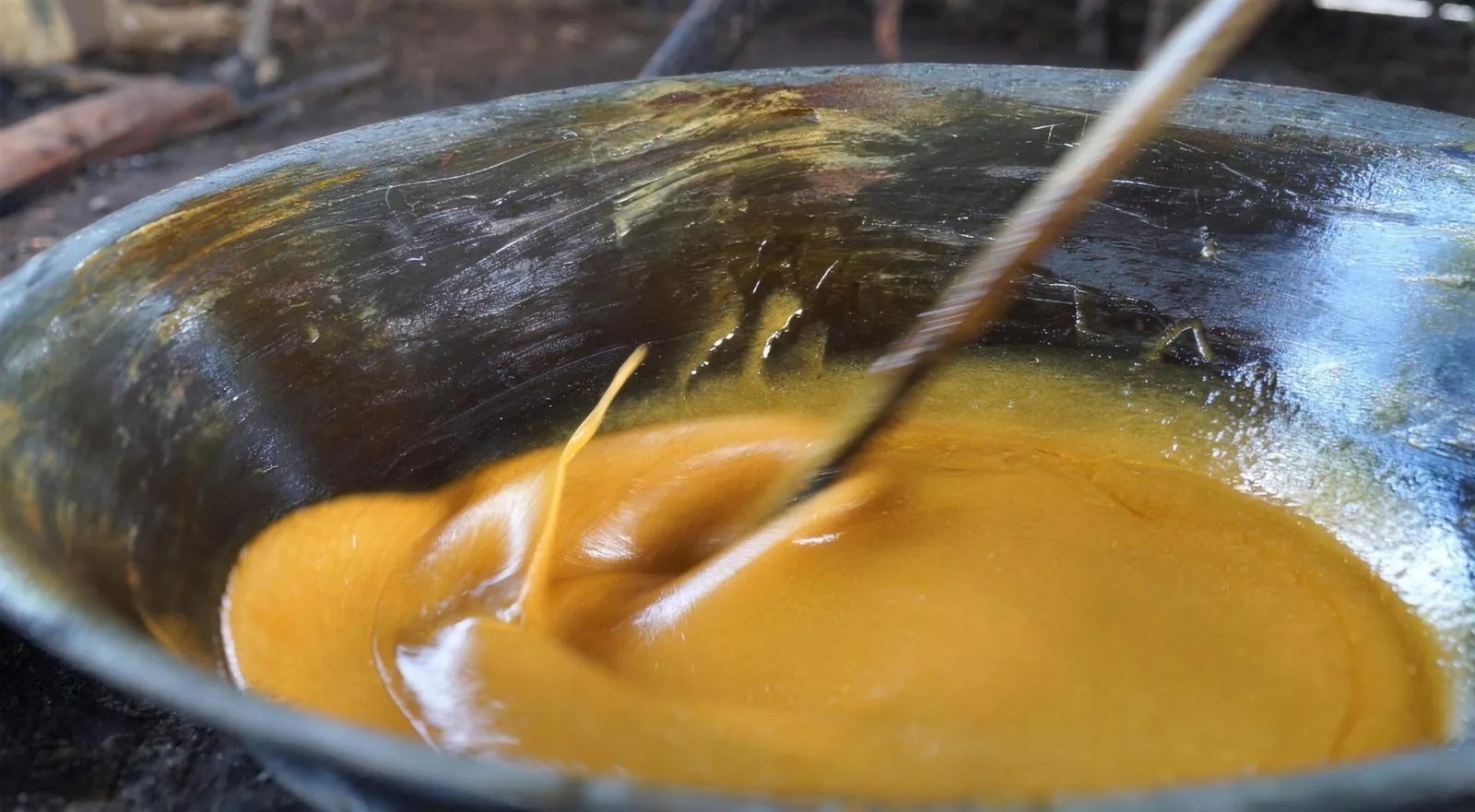
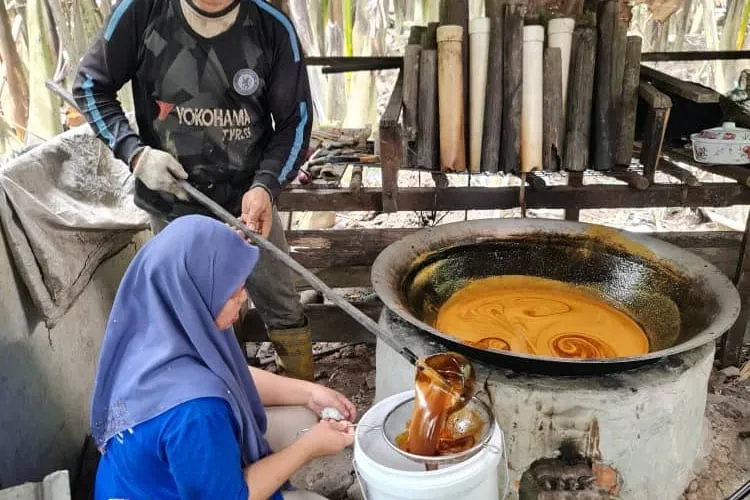
Golden Gula Apong syrup swirling in a wide wok as it is stirredTwo farmers at a wok stove, straining freshly boiled sugar into a pail

Gula Apong and Gula Melaka.

Two palms, one craft. Gula Apong comes from the nipah palm; Gula Melaka — coconut sugar — from the flower sap of the coconut palm. Both are tapped, boiled and set the same way.

Gula Apong

Darker and more savoury, with a deep caramel edge. The sugar behind Sarawak's milk tea and ice cream traditions.

Gula Melaka

Rounder and more buttery, at home in kuih, sauces and bakes across Malaysia.

Both sugars, across every format — see the range →

The sugar itself

Lower on the glycaemic index.

Coconut sugar against refined white sugar.

Coconut sugar

49.3

glycaemic index

Refined white sugar

~65

glycaemic index

And it swaps 1:1 for cane sugar — comparable sweetness, so switching costs your recipe nothing.

How we work with farmers, and how batches are traced back to source, is set out on the traceability page.